

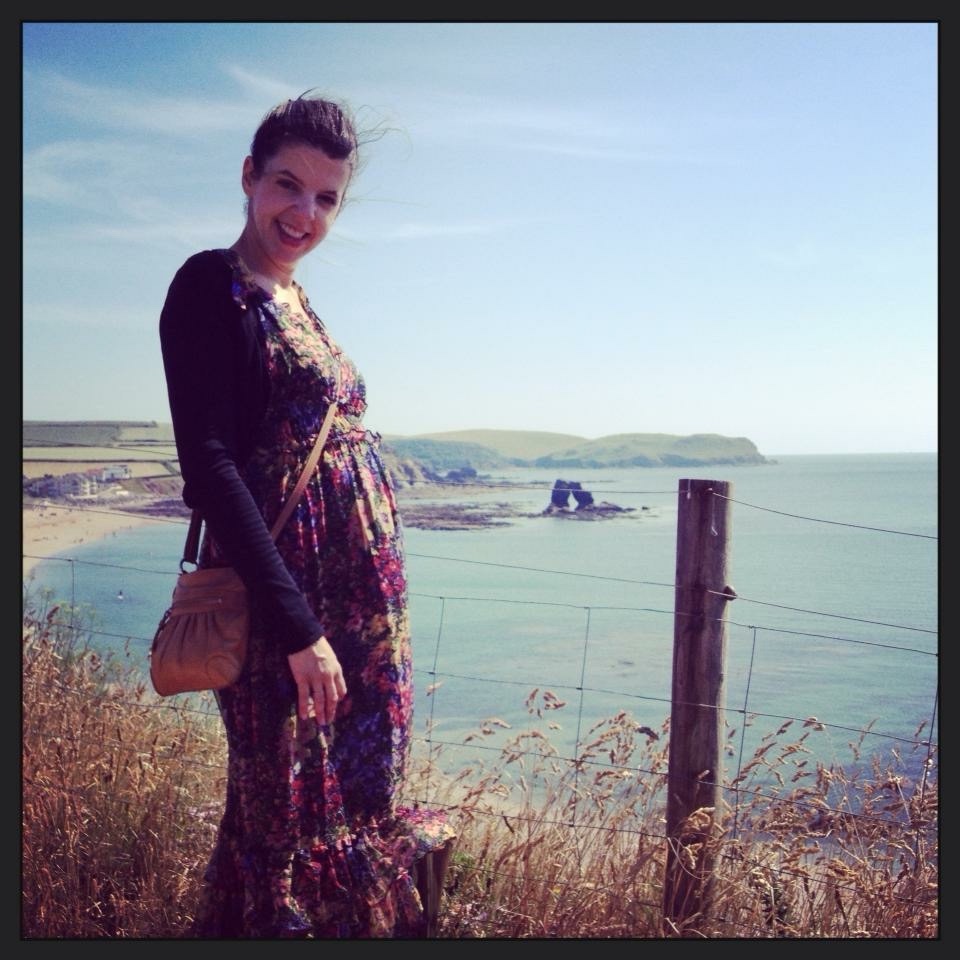
There is a quiet assumption woven through conversations about pregnancy and motherhood: that the person becoming a mother already knows who she is.
That she understands her body.
That she understands her limits.
That she understands her needs.
That she has language for distress, for capacity, for difference.
For many of us, that assumption is wrong.
I became a mother before I understood my own neurodivergence. Before I had language for my Autistic and ADHD (AuDHD) characteristics. Before I understood how much of my life had been shaped not by choice, but by adaptation. What followed was not a sudden breakdown caused by pregnancy, but the exposure of a nervous system that had spent decades surviving places it was never designed to occupy.
Pregnancy did not create my distress.
It removed the scaffolding that had been holding it together.
Before pregnancy, my life relied on carefully built routines, predictability, and control. These were never indulgences; they were infrastructure. Private systems that allowed me to function in a world that constantly perplexed me. Pregnancy disrupted all of that. My body became unpredictable. My senses intensified. Medical systems demanded compliance. Social spaces demanded gratitude. And I had no language to explain why this felt so overwhelming.
What was labelled as anxiety was, in reality, a body under sustained strain.
Pregnancy is often described as a glow. For me, it was almost suffocating. Heightened smells, sounds, touch, internal sensations. Loss of bodily boundaries. Medical touch without sensory consent. Later, pain and immobility from symphysis pubis dysfunction meant that moving through the world required negotiation, planning, and endurance; even when, from the outside, I looked fine.
Motherhood then extended this exposure into public space.
Baby groups, appointments, shops, drop-offs, all governed by unspoken social rules and moralised ideas of time, competence, and coping. To struggle visibly was to risk judgement. To name difficulty was to be reminded to feel grateful. So I performed wellness while depleted, carrying on a lifetime pattern of people-pleasing that had once kept me safe.
People-pleasing is often framed as a personality flaw. In reality, it is a survival strategy learned early, in environments where being agreeable reduced harm. Weak boundaries are not moral failings; they are protective responses shaped by place, power, and past experience.
It was only after becoming a mother for the first time that I discovered my Autistic and ADHD identity. From that point on, I could re-play my life with accuracy and compassion. Not as a series of personal failures, but as predictable responses to environments that demanded compliance over care.
Motherhood did not break me.
It exposed how much of my life had been spent disappearing to stay safe.
This is not a story of failing at motherhood. It is a story of attempting to navigate it without a map. And of what becomes possible when identity is finally named, when language is found, and when we stop blaming ourselves for struggling in places that were never designed to hold us.
Motherhood becomes possible not through endurance, but through truth.