

TW: talk of suicide
We spend a great deal of time talking about supporting children and young people with SEND – and rightly so.
But there is another narrative that is rarely spoken about.
The one that proves – categorically – that without the necessary support, people are harmed!
What about the late-discovered Autistic and ADHD adults now living with Complex PTSD, chronic anxiety, burnout, nervous system dysregulation, and long-term mental health difficulties because their needs were repeatedly misunderstood, minimised, or ignored throughout childhood?
Many leave this earth long before their time because they were led to believe that they were the problem – not the system.
And for those who survive, but are left unable to cope unsupported because of the damage caused by those same systems, they are often forced into another exhausting cycle:
applying for support, being refused, appealing, winning, and then having to repeat the process over and over again.
I ask this not only as a parent, but as one of those adults myself.
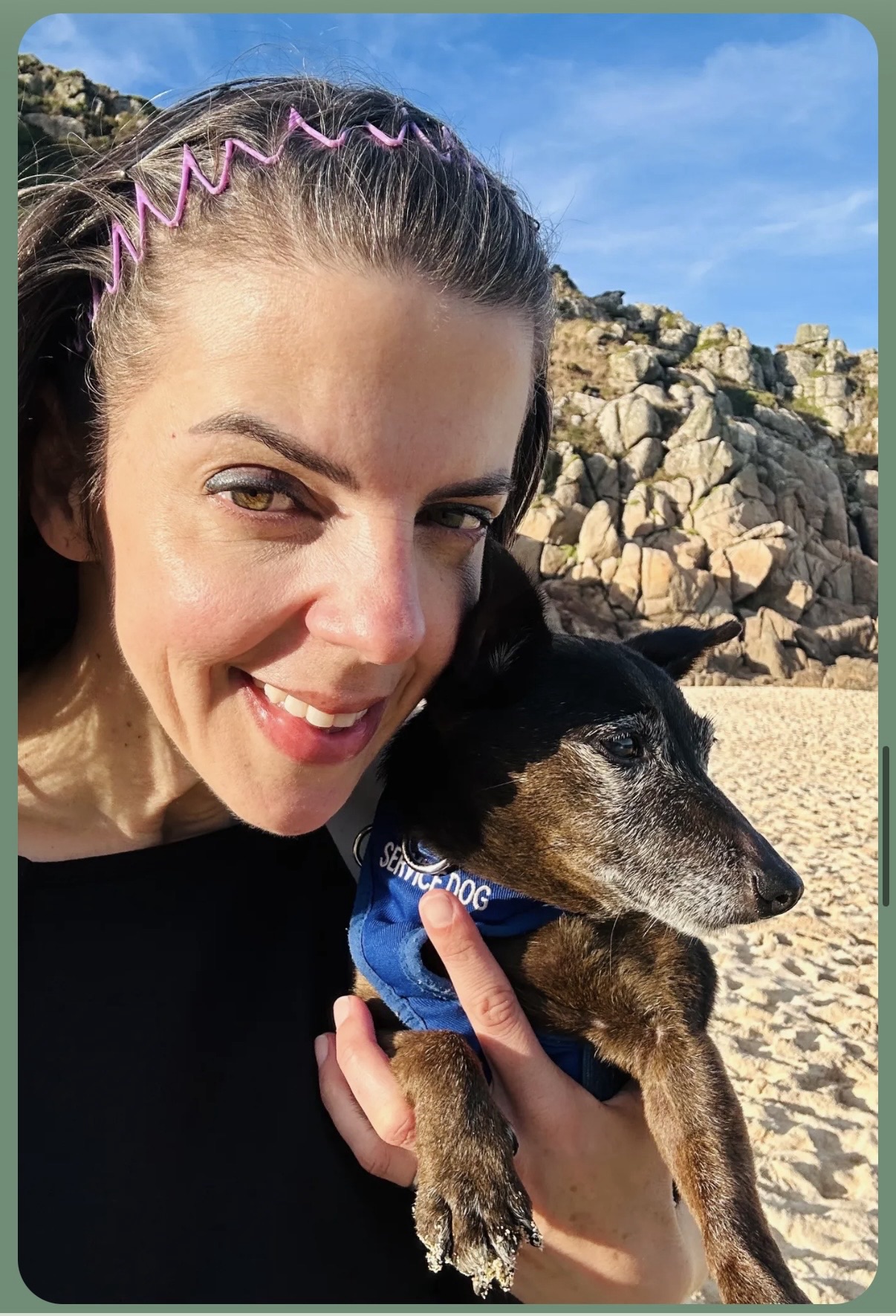
My name is Rachel Winder. I am an Autistic-ADHD consultant, author, trainer, and advocate. I am also dyslexic, have dyscalculia and hyperphantasia, and live with cPTSD linked to my own traumatic education as an unidentified Autistic ADHDer.
I was identified at forty years old while parenting two AuDHD children of my own.
Like many late-discovered neurodivergent adults, I spent decades believing I was fundamentally flawed, broken, overly sensitive, difficult, or simply “not trying hard enough” – because that is what systems implicitly teach you when your nervous system is struggling but nobody understands why.
I now hold both a PgCert and an MA in Autism, qualifications I pursued largely in response to the repeated ignorance I encountered from people in positions of power who refused to accept my lived experiences as valid.
I did not gain those qualifications to prove my worth.
I gained them because, while advocating for my own neurodivergent children, my lived experience alone was too often dismissed.
My oldest child (age 12) is now thriving in a supported specialist setting after years of struggle within environments that could not meet need appropriately. It took me 4 years and £5,000 of assessments to secure that placement.
I am now having to repeat that process.
My youngest is currently unable to attend school due to severe school-induced anxiety. He is 8 and becomes too afraid to leave the house. His anxiety has become so overwhelming that obsessive compulsive tendencies have started to emerge as his nervous system attempts to regain a sense of predictability and control.
This is not rare.
And that is exactly the problem.
We are still talking about these experiences as isolated incidents rather than predictable outcomes of systems that repeatedly fail neurodivergent children.
During the Derby peaceful protest on 9th May, held outside the Council House, we heard speeches from Dr Luke Beardon, Dr Stephen Connolly, Consultant SaLT Libby Hill, and Eve from Let’s Make a Difference.
The central message was simple:
The problem is not that we lack legislation.
The problem is that the legislation already in place is so often not properly followed, enforced, or funded.
And when systems fail children repeatedly over time, the damage does not simply disappear once those children become adults.
The consequences often continue for decades.
Many neurodivergent adults are now unable to work not because they lack intelligence, skill, empathy, creativity, or potential – but because surviving prolonged misunderstanding, sensory overwhelm, chronic stress, invalidation, and educational trauma came at an enormous psychological and physiological cost.
Yet these stories remain largely invisible.
Society talks about the cost of support, but far less about the cost of failing to provide it in the first place.
We already have years – arguably generations – of evidence showing that unsupported neurodivergent children are more likely to experience poor mental health, trauma, burnout, exclusion, chronic illness, unemployment, and dependency on overstretched services later in life.
Failing systems do not save money.
They simply move the cost further downstream.
The price is eventually paid through mental health services, crisis intervention, loss of employment, family breakdown, physical illness, trauma services, social care, and human suffering.
And perhaps most painfully of all:
through lost time.
Time spent fighting systems instead of living.
Time spent surviving instead of developing.
Time spent learning to hate yourself for difficulties that were never moral failings in the first place.
This is why these narratives matter.
Because the adults carrying these wounds today are the evidence of what happens when systems repeatedly fail neurodivergent children.
We should not have to keep producing traumatised adults in order to prove that the harm is real.